
Bloomingdale Neighbors by Public Source
Start with the source that fits the question. GIS shows which parcels touch or fall near one address. Property Lookup supplies a separate card for each PIN. The election address form identifies precinct and district geography. Village and library pages point to community groups and public program records. Historical criss-cross volumes can show an older address listing, but they are not a current block roster.
| Source | What It Shows About a Block | Access |
|---|---|---|
| DuPage GIS Parcel Viewer | Lot geometry, nearby PINs, subdivision context | Free online viewer and help |
| DuPage Property Lookup | Billing name, situs, legal description, tax and transfer fields | Free parcel-by-parcel portal |
| DuPage voter address search | Polling place, precinct, and districts for one address | Free form; no public block export |
| Village and BPL group routes | Organizations, public programs, and historical material | Public pages or staff request |
| Haines criss-cross volumes | Past address and phone listings | Wheaton Public Library, on site |
An owner name is not an occupant list. A billing address can differ from the property address, and a nearby parcel may be vacant land, common space, a business, or part of a larger tract. Keep each conclusion as narrow as the source.
Record dates matter as much as names. A tax card reflects its assessment cycle, a deed reflects the day it was recorded, and a community page reflects the organizations listed when it was viewed. Comparing sources without their dates can make a former owner look current or an old civic role look active. Save the PIN, source, date, and exact field label for every parcel around the Bloomingdale block.
Map Bloomingdale Neighbors by Parcel
The DuPage GIS Parcel Viewer provides a documented adjacent-parcel method. It is a map operation, not a people list. Begin with one parcel result and let the buffer create a defined local area.
- Search the known address or its PIN. Select the correct parcel from Parcel Search Results.
- Open Buffer. Set the distance and units, then choose Parcel Search Results as the source.
- Run the buffer. Touching or nearby parcels highlight and join the result list.
- Open each item detail, save its PIN, and review that parcel in DuPage Property Lookup.
- Compare situs, billing name, mailing address, legal description, and any homestead field without assuming present occupancy.
The tool defaults to 250 feet. Shape and buffer operations allow up to 1,000 parcels, and a documented URL can hold up to 100 PINs. For a full named road rather than the immediate block, use the Bloomingdale street directory.
Buffer distance changes the question. Touching parcels give the tightest ring. A larger radius may cross a road, take in a shopping parcel, or reach a different subdivision. Use the current Village subdivision, address, zoning, and flood maps to label what the GIS result contains. Then remove vacant, public, common, and nonresidential land from any count meant to describe nearby homes.
Bloomingdale Neighbor Parcel Records
DuPage Property Lookup searches by parcel number, address, billing name, or map. A result may show the PIN, billing owner and address, property or situs address, tax year, assessments, exemptions, transfer history, legal description, and maps. The county warns that data comes from the last certified assessment, may change, and cannot be mined in bulk.
The county real-estate fields make a key split: `PROPADDR` describes where the parcel lies, while `BILLADDR` is assembled from tax-mail fields. If they match, that supports but does not prove owner occupancy. If they differ, neither field identifies all people at the home. A homestead exemption is also a tax indicator, not a live resident check.
Transfer and conveyance history can reveal that ownership changed, while legal description and split or combine history explain a parcel boundary. Those tabs help resolve the map, not private family ties. If a result seems stale, use the Recorder's deed index to confirm the latest recorded instrument. Older instruments may require the Recorder's public terminals or research desk in Wheaton when the web index boundary is reached.
Note: Review each surrounding PIN on its own card; a shared map edge does not create a personal or household relationship.
Bloomingdale Neighbor Voter Geography
The DuPage voter address route requires a house number, street name, and city, with direction and suffix handled separately. It can return the polling, precinct, and district path for that address. This lets a reader compare civic geography across nearby addresses without claiming to know every registered voter.
There is no public button that lists all voters on a Bloomingdale block. Illinois Election Code 10 ILCS 5/1A-25 restricts file use and redacts sensitive fields, including street number, phone, birth date, parts of email, and identity numbers. Ask the Election Division for official aggregate statistics when the question concerns a precinct, and never publish protected fields from a voter file.
Bloomingdale Neighbors in Civic Groups
The Village Community Groups page points residents toward local clubs, civic organizations, and volunteer routes, and states that Bloomingdale Public Library keeps the complete area listing.
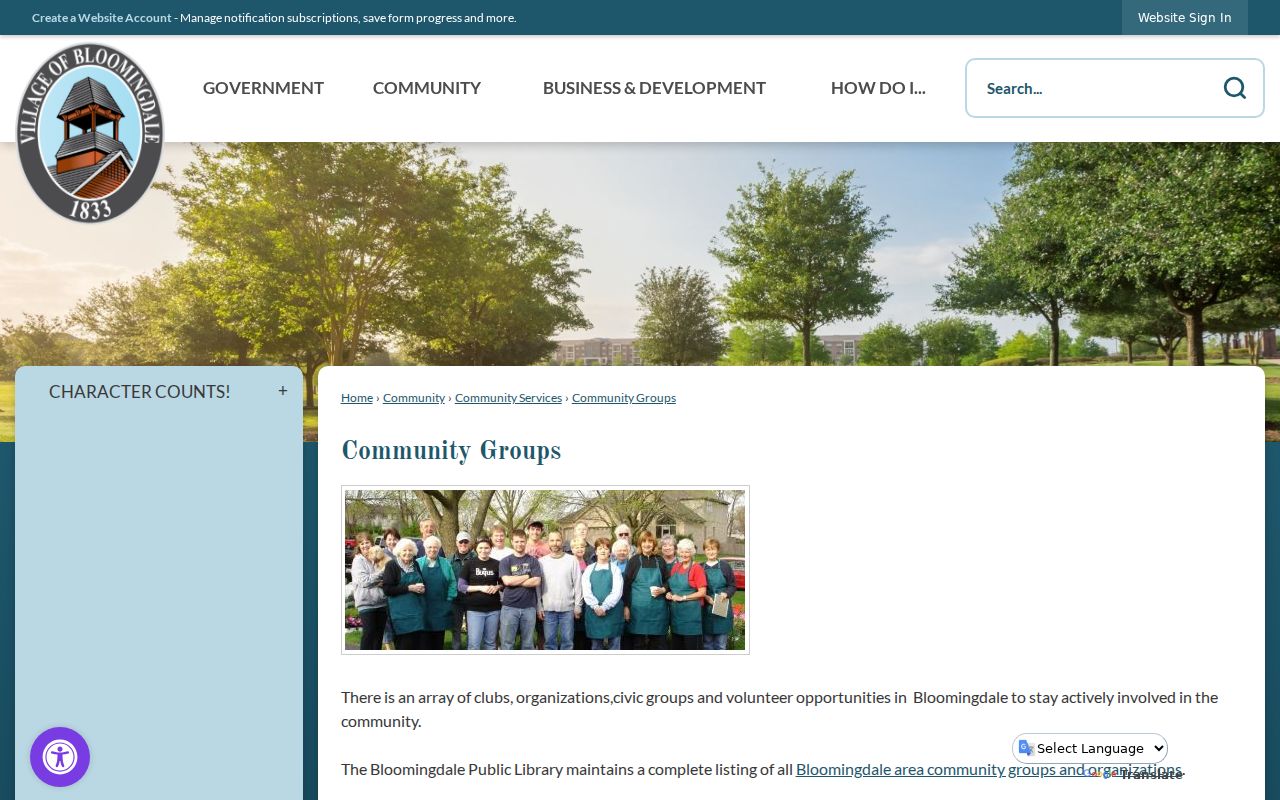
The page is an umbrella directory. It does not turn private membership or home addresses into public data.
Village Community Groups
Public route to clubs, civic groups, and volunteer opportunities. Individual rosters were not located.
Bloomingdale Public Library
Complete area group listing plus organization files in the Local History Room. Call 630-924-2765 for historical help.
Public Agency Network
The Village, Park District, Fire Protection District, and library collaborate on events. Their calendars show public presence, not private membership.
Historical organizations appear in the 1915-16 directory, including churches, fraternal groups, and a volunteer fire department. Those names can guide research at the library or DuPage Historical Museum, but no current official HOA or member directory was found.
BPL's Local History Room adds maps from 1870 onward, a historic-building index, real-estate listings from the early 1960s through early 1980s, cemetery and obituary indexes, minutes, and the Village Almanac from 1975 onward. Staff can help connect a group name or public event to a place and year. That community layer is often more accurate than trying to infer social ties from neighboring tax cards.
Bloomingdale Neighborhood Watch Records
The Village Archive Center preserves Neighborhood Watch newsletters and program material. A 1989 status report described 44 active block captains, meetings every other month, and newsletters in alternate months. That is a useful historical number because it documents how civic contact once moved across Bloomingdale blocks.
No current public captain-by-block roster was located. Search the Village archive by program and year for newsletters or reports, then contact the administrative office for retained public material. Do not infer a current captain, participant, or home address from an old newsletter.
The Village administrative page identifies the office that routes records, codes, policies, agendas, minutes, licenses, and Illinois FOIA matters.
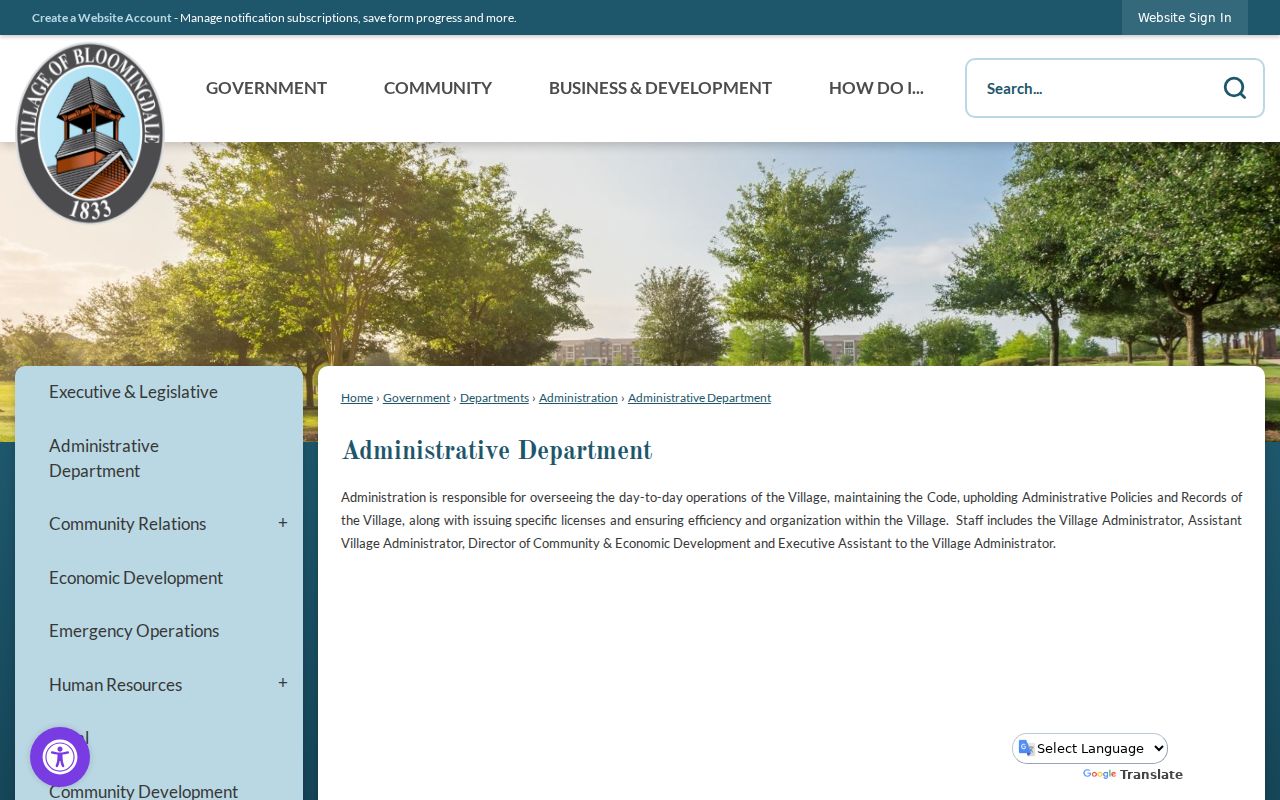
The capture gives a direct fallback when the Archive Center does not expose a needed public file.
Request the smallest useful record set: one program, one date span, or one named report. The Village public-record route separates police files from other Village material and refers fire records to the fire district. Illinois FOIA provides a request channel, but it does not turn private rosters into public records or remove exemptions that protect personal data.
Bloomingdale Neighbor Source Differences
Official records and commercial neighbor tools are built for different ends. County and Village sources identify the custodian, field meaning, and date. Commercial profiles may merge names, addresses, and phones from many feeds, but often hide provenance and can lag behind corrections.
| Source type | Strongest use | Main limit |
|---|---|---|
| Official parcel and GIS records | Parcel identity, owner field, geometry, legal description | Not a complete occupant list |
| Election address form | Precinct, polling, and district geography | No public block roster |
| Village and library sources | Public groups, events, and neighborhood history | Private rosters stay private |
| Commercial profile category | Possible lead for later checking | May be stale, merged, costly, or unclear |
Use an official source to confirm every claim that matters. If a county display is wrong, ask that custodian for its correction path instead of copying an unverified profile.
Bloomingdale Neighbor Public Roles
Some questions concern a public professional or business role near a block, not a household. The Illinois Department of Financial and Professional Regulation license lookup is the official route to check a licensed person or entity.
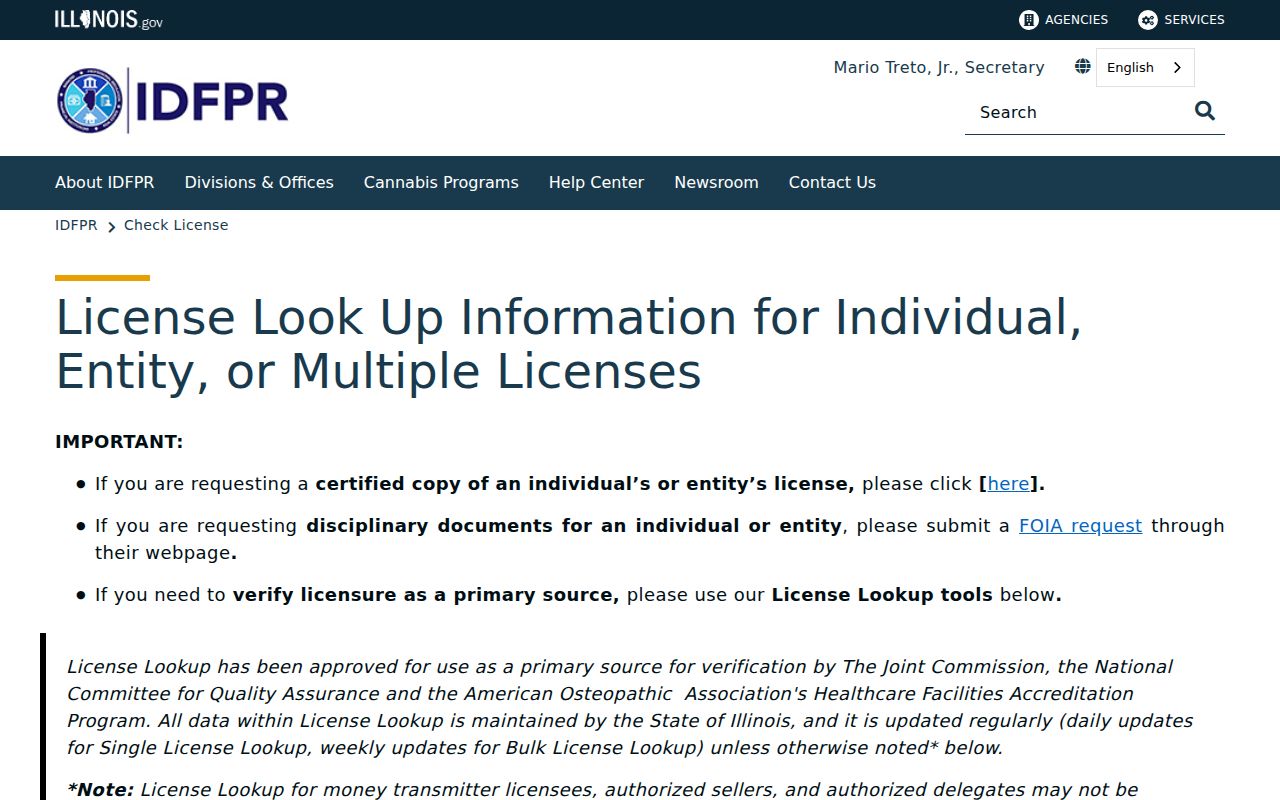
A license result verifies the state record shown. It does not prove that a licensee lives at a nearby parcel.
For public safety records, the DuPage Sheriff Records Division is custodian for booking, incident, and crash material.
Its records route should be used for a specific lawful request, not as a substitute for parcel or community research.
Privacy for Bloomingdale Neighbors
Parcel cards do not enumerate every household member. Utility accounts, delivery data, and driver addresses are not a public neighbor directory. Voter files redact protected data. Private group and HOA membership lists were not found in official sources. When a source offers only an owner, public contact, or organization name, stop at that fact.
The Illinois Address Confidentiality Program supplies eligible people with a substitute address for new state and local records. Participants have extra voter protections. The Attorney General says the program cannot ensure confidentiality in real-property records or erase addresses already public. Never try to connect a substitute address back to a protected home.
Lawful use. Research Bloomingdale neighbors for civic curiosity, family contact, scam checks, or personal safety. Never use a record to watch, harass, intimidate, or harm anyone.